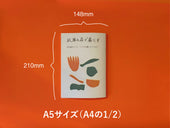
Guide to Book Part Names (Head, Tail, Fore-edge, Gutter, and Type Area) and Margin Setting
平田提When creating a ZINE, you might encounter unfamiliar terms during conversations with printing company operators or while researching printing-related information.
"Perhaps we should leave a bit more space on the fore-edge?"
"The gutter might get caught."
These are examples of such terms. Learning the names of book parts just once can streamline these interactions. Let's make sure to grasp them.
A book's "top and bottom" are called "tenchi"

When a book is open, the top part is called "ten" and the bottom part is called "chi." They are often referred to collectively as "tenchi." Since it can be difficult to distinguish between top and bottom solely by appearance, tenchi clarifies the orientation. Tenchi is also useful when operating a risograph for self-printing; if printing double-sided with short-edge binding, you flip the paper aligning the "ten" direction.
Left and right of a book
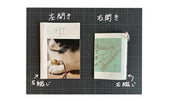
When a book is open, the outer part (the edge of the page, opposite the binding side) is called the "fore-edge" (koguchi), and the binding side (the middle) is called the "gutter" (nodo).
The gutter is the part that becomes harder to open as the book gets thicker. If the gutter margin is too small, text can get drawn into the binding, making it difficult to read. Perfect binding, in particular, is difficult to open, so it is recommended to leave a margin on the gutter side. Saddle stitching allows the book to open 180 degrees, so a wide gutter margin isn't as crucial.
The fore-edge is close to where the paper is trimmed, so it's safer to keep important designs or text at least 3mm inward from the fore-edge.
・Related article: What is bleed? Essential settings to check before submitting your ZINE
Printed area, page number, and running head
The area where the main text, figures, etc., are printed is called the "printed area" (hanzura). The balance between the size of this printed area and the margins is a crucial factor in determining the readability of a page.
Page numbers are called "nombres." This comes from the French word "nombre" (number, numeral). If your ZINE has many pages, adding nombres will help readers navigate it easily. Nombres are generally placed outside the printed area (on the top, bottom, or fore-edge).
When chapter names or section names appear in the margin, they are called "running heads" (hashira).
Cover and body

Although the cover is a single sheet of paper, its four sides have distinct names. The front visible side is "cover 1" (hyo ichi), its reverse is "cover 2" (hyo ni), the inside of the last page is "cover 3" (hyo san), and the very last page, the back cover, is "cover 4" (hyo yon).

The colophon (the page listing publication date and contact information) is sometimes placed on cover 3. There are also ways to reduce costs by leaving cover 2 and cover 3 "blank (no printing)."

The bulk of the content inside the cover is called the body (honmon).
For text-heavy works, an A5 size might be more readable with a slightly narrower printed area, among other size-dependent differences. Please consider what kind of appearance and feel you want for your ZINE when deciding on the size and approaching the design.
・Related article: How to choose the right size for your ZINE?
What are endpapers and title pages?

When creating a slightly more elaborate ZINE, the terms "endpapers" and "title page" come up. Endpapers refer to the paper glued to the inside of the cover. They serve both to reinforce and decorate the book, and generally include the "pastedown" glued to the cover and the unprinted "free endpaper." Inserting a different colored paper between the cover and the body adds an accent when the book is opened.
A "title page" is the first page of the main text or the beginning page of a chapter. The former is called the "main title page" and the latter the "chapter title page." Main title pages often prominently feature the title and author's name. In books, it's common for the entire first page to be used as a title page, with the main text starting on the second page.
Summary
If a printing company points out, "Your gutter margin is only 3mm," knowing these terms will immediately tell you exactly which part needs correction. Without this knowledge, you'd have to clarify what they're referring to.
Please remember these terms as a common language to ensure smoother communication after submission.
・Related article: Perfect Binding vs. Saddle Stitching: What are their characteristics?